Tenha acesso total e gratuito
Benefícios da Plataforma Educativa Coloplast® Professional
- Acesso completo a todos os conteúdos educativos, eventos e recursos
- Acompanhe o seu progresso de aprendizagem
- Partilhe conteúdos com os seus colegas
- Partilhe materiais de apoio com os seus pacientes
A rigidez dos cateteres intermitentes varia. As versões mais suaves vêm frequentemente com uma manga de inserção exterior ou uma pega. A função da manga e da pega é permitir que o utilizador segure o cateter em qualquer ponto durante a inserção. Tanto a manga como a pega são úteis para controlar um cateter feito de um material suave, uma vez que este pode dobrar-se fora da uretra quando inserido. Os cateteres mais rígidos podem ser inseridos com um movimento mais suave, pois conseguem superar a resistência normal da uretra.
Métodos de cateterização intermitente
- Técnica limpa: A técnica limpa consiste na autocateterização utlizando uma técnica sem toque. Isto significa que a pessoa que realiza a cateterização tem contacto direto com o conector do cateter, mas o próprio cateter não deve ser tocado. Ao utilizar a técnica limpa, existe um risco potencial de contaminação, sendo importante lavar cuidadosamente ambas as mãos, bem como a abertura da uretra, com água e sabão. Siga sempre as instruções fornecidas pelo fabricante. A técnica limpa é utilizada fora dos hospitais (1).
- Estéril: A técnica estéril caracteriza-se por um cateterismo em que a pessoa que insere o cateter utiliza luvas estéreis e não tem contacto direto com o cateter. Esta técnica é frequentemente realizada por profissionais de saúde em contextos hospitalares (1).
Catheter types
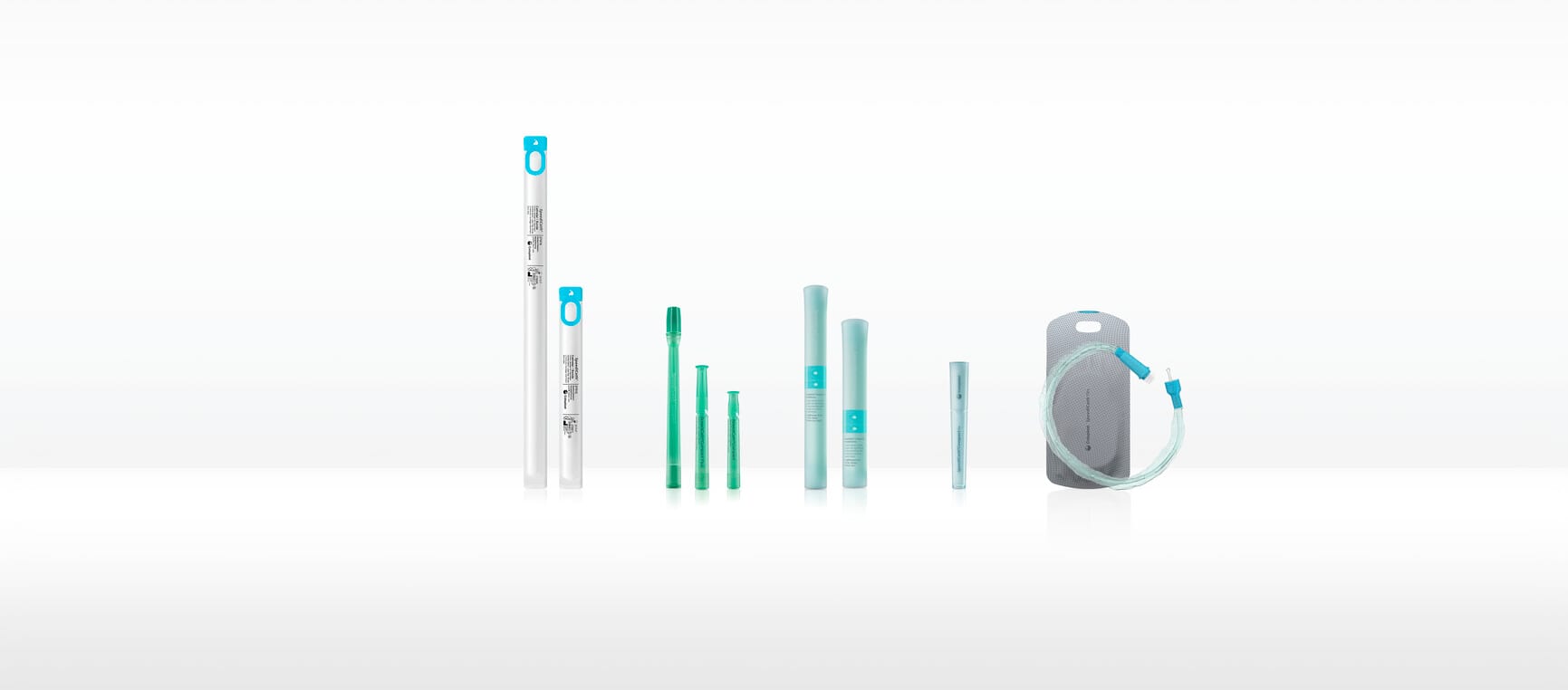
- Standard catheters: Standard catheters are the most common catheter type. These catheters are primarily straight and typically come in standard lengths of approx. 40 cm for men and approx. 20 cm for women. The firmness of standard catheters varies.
- Compact catheters: Most compact catheters are similar to the standard catheters, but shorter and packed more discrete. Often, they are easier to use due to the shorter length (kilde).
- Sleeve catheters: The sleeve catheters are soft catheters covered with an insertion sleeve. The sleeve protects the catheter from contamination during insertion.
- Catheter sets: Catheter sets are standard, compact or sleeve catheters pre-connected with a drainage bag to collect the urine.
Catheter tips

- Nelaton tip: Is defined by a straight tip and is for both men, women, and children with no special catheter needs
- Tieman/coudé tip: Is defined by a curved tip and is primarily for men. The tips design to make it easier for men with enlarged prostate to insert a catheter.
- Flexible tip: Is defined by a flexible often ball shaped tip which gently guides the catheter through any curves or bends in the urethra.
Catheter eyelets
Most intermittent catheters come with two eyelets or holes close to the catheter tip. The urine is drained when the eyelets reach the bladder.
The shape, size, positioning, manufacturing process and surface treatment of the eyelets are important for how the catheter performs and how gentle it is to the urethra.
Coating on intermittent catheters
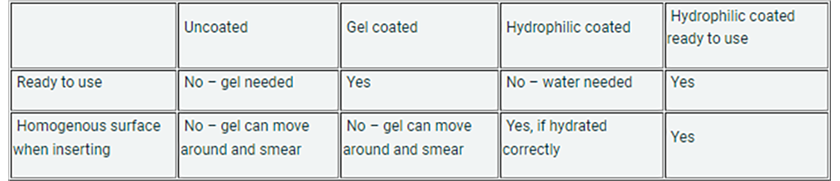
To insert an intermittent catheter in the most safe and comfortable way, it needs to be lubricated. A slippery surface eases the insertion and reduces the risk of damaging the urethra. There are several kinds of surface treatments for intermittent catheters.
- Uncoated: Catheters which must have a gel added manually before use.
- Gel coated: Catheters that are coated in gel and can be inserted without any further preparation. The challenge with gel coated catheters is that the coating can be rubbed off during insertion leaving the catheter uncoated. The coating can be left in the urethra and bladder when removing the catheter.
- Hydrophilic coated: Catheters that are pre-coated with a dry hydrophilic coating. The coating needs to be activated by adding drinking or sterile water for 30 seconds. This will allow the coating to swell into a slippery smooth layer. The coating layer stays on the surface of the catheter during use.
- Hydrophilic coated ready to use: Catheters that are coated with a hydrophilic coating and come immersed in water, ready to use so you don’t need to bring nor think about access to water no wait for optimum hydration of the coating (13,14).
Catheter sizes
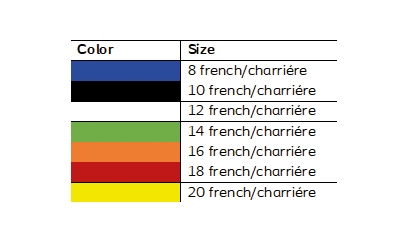
It is key to the success of the catherisation to find the right catheter size. The size of an intermittent catheter refers to the outside diameter of the catheter. The measuring unit is used in 1/3 mm and is referred to Charriére or French. The size should not be too big as this might complicate insertion. The size should not be too small as the urine might then flow on the outside of the catheter. In general, the bigger size, the better flow. However, several specific parameters such as the inner diameter (ID), the tip inlet area to inner lumen area ratio (AR), and resistance from the inlet tip also influence catheter flow rates. Hence, it is not possible to predict the actual flow rate of urinary catheters based on the packaging information or specifications (Ref: Journal of Pediatric Urology (2017) 13, 377.e1e377.e6).
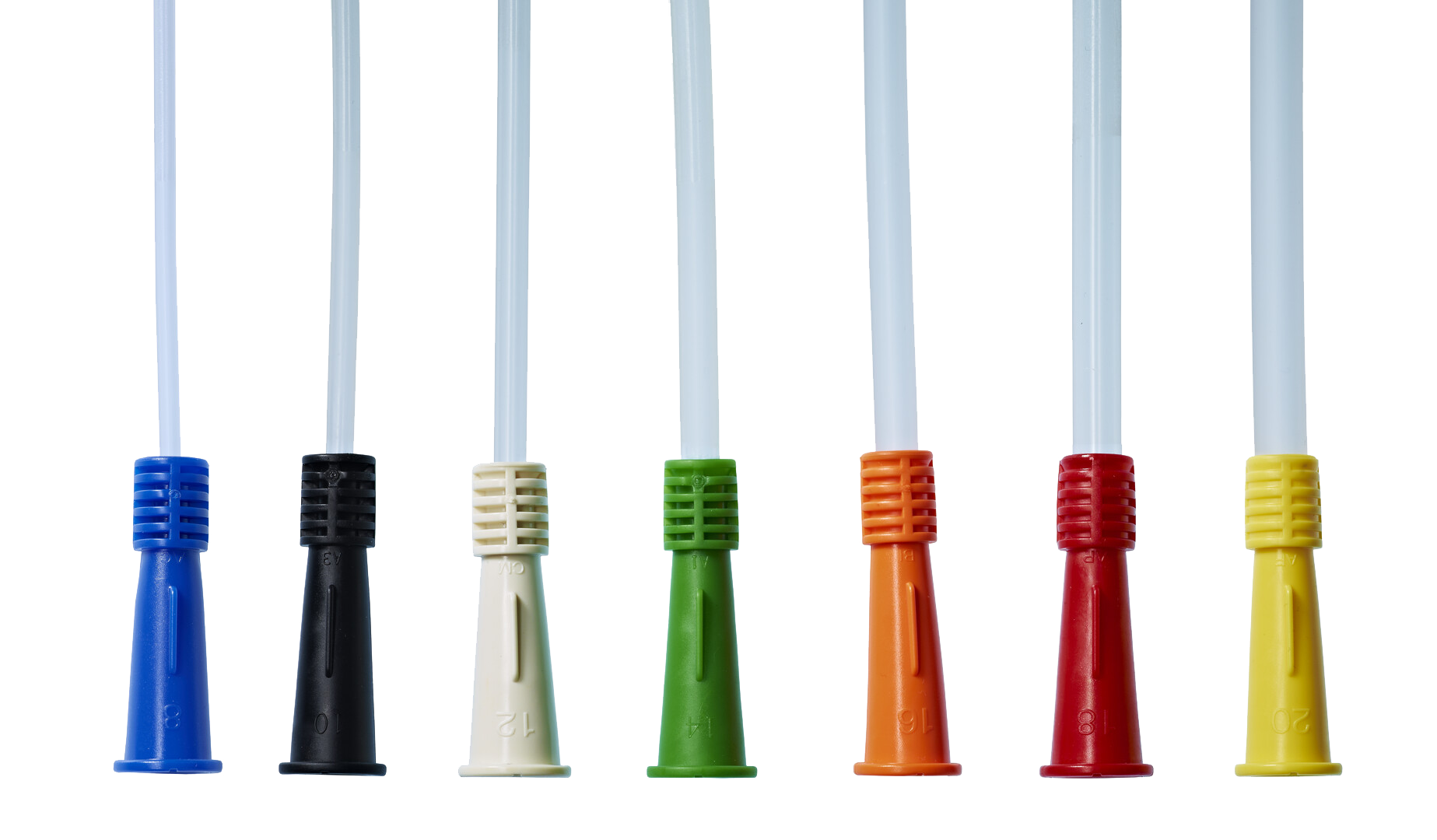
Often the size of the catheter can be identified by the color of the connector.